
Guides
Prague vs Vienna vs Budapest: which capital, and how to combine them
Tony Denesa – Travel Advisor9 min read
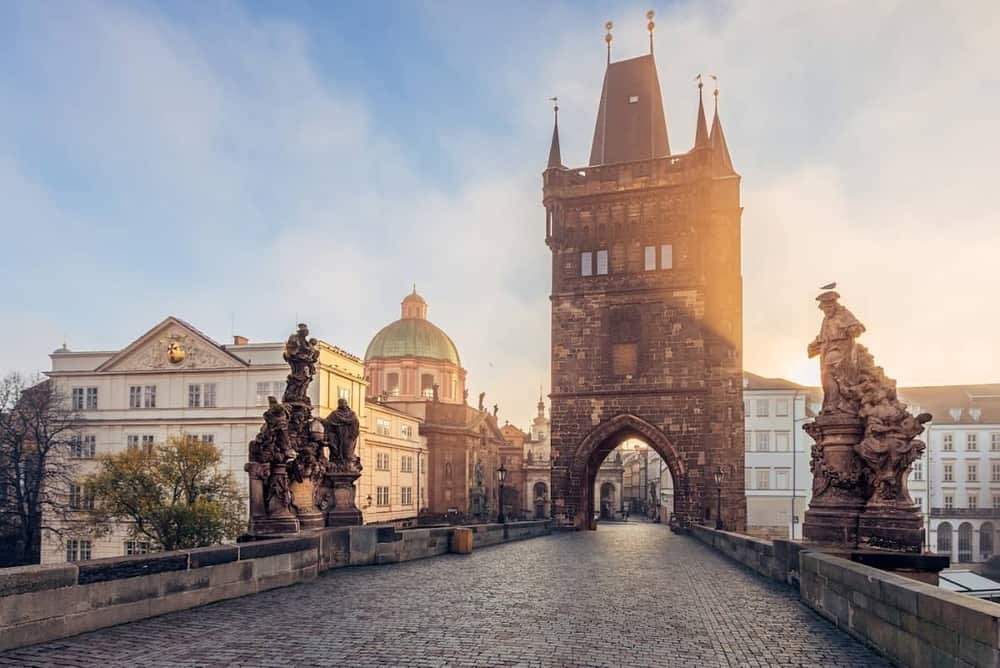
Prague, Vienna and Budapest are often sold together as the great trio of Central Europe, and with reason: all three were ruled from the same imperial court for centuries, all three sit on great rivers, and all three are a few hours apart by train. But they feel very different. If you can only choose one, or you are deciding how to split a week between them, here is an honest comparison. We live and breathe Prague, so we will tell you where the others win too.
The short version
- Prague is the most romantic and the most compact: a Gothic and Baroque old town, a castle on a hill, beer that is a way of life. Best for first-time visitors to the region, walkers and beer lovers.
- Vienna is the most elegant and the most expensive: imperial palaces, world-class museums, opera and coffee houses. Best for culture, classical music and a polished, orderly city break.
- Budapest is the most dramatic and the most relaxed about nightlife: a Danube panorama, thermal baths and ruin bars. Best for spa lovers, night owls and big views.
Atmosphere and sights
Prague survived the twentieth century with its historic centre largely intact, and it shows. The Old Town, Malá Strana and Prague Castle form one walkable medieval and Baroque ensemble, crossed by Charles Bridge. It feels like a fairy-tale city, especially early in the morning. Its weakness is the crowds in the centre at peak times.
Vienna is grand rather than intimate. The Ringstrasse, the Hofburg, Schönbrunn and the Belvedere express imperial power, and the museums are among the best in Europe. It is spacious, very clean and superbly organised — and to some visitors, a little formal.
Budapest has the most spectacular setting: the Danube cuts between the hills of Buda and the flat grandeur of Pest, with Parliament and the Castle District facing each other. It is grittier and livelier than Vienna, with a nineteenth-century scale.
Costs
Of the three, Vienna is clearly the most expensive for hotels, restaurants and drinks, with prices close to Western Europe. Prague and Budapest are cheaper, although both have become noticeably pricier in their centres. In Prague, the gap between tourist squares and ordinary neighbourhoods is large: a beer or a plate of goulash away from Old Town Square costs far less. At Lokál Dlouhá, goulash with dumplings was 219 Kč on the published menu when checked in September 2026. Our guide is Prague expensive? and the prices page give you the detail.
Currencies differ too: Prague uses the Czech koruna, Budapest the Hungarian forint, and Vienna the euro. Pay by card in the local currency in all three. More on the Czech side in the Czech koruna.
Food and drink
- Prague is the beer capital of the world, with beer halls, tank beer and a hearty cuisine of goulash, dumplings and roast pork. See the origins of Czech cuisine.
- Vienna has the coffee houses, the schnitzel, the cakes and the wine taverns on its edges.
- Budapest has paprika, goulash soup, lángos, excellent wine and a strong café tradition of its own.
Nightlife
Budapest's ruin bars are famous and its party scene is the loudest of the three. Prague has a big and varied night: cocktail bars in the Old Town, pubs and clubs in Žižkov and Vinohrady, and summer evenings on the river at Náplavka — see the nightlife section. Vienna is calmer, better for wine bars and concerts than for clubbing.
Music and culture
Vienna leads for classical music and opera. Prague is a close second, with the Czech Philharmonic at the Rudolfinum, the Estates Theatre where Mozart premiered *Don Giovanni*, and the Prague Spring festival — see music in Prague. Budapest's opera house and concert halls are excellent too, and often cheaper.
Getting between them
All three are linked by direct trains:
- Prague – Vienna: around four hours by train.
- Vienna – Budapest: around two and a half to three hours.
- Prague – Budapest: around seven hours by train, often via Bratislava; night trains and flights also exist.
Timetables change, so check with the railway operators before you book. If you are driving, read driving to Prague.
How to combine them
- One week: three nights in Prague, two in Vienna, two in Budapest — or skip Vienna and give Prague and Budapest three and four nights each.
- Ten days: four in Prague with a day trip to Kutná Hora or Karlštejn, three in Vienna, three in Budapest.
- Direction: Prague → Vienna → Budapest is the natural line, ending with the baths to rest your legs.
Our honest verdict
If this is your first trip to Central Europe and you can see only one city, choose Prague: it is the most beautiful to walk, easy to understand in a few days, and good value once you step away from the busiest streets. Choose Vienna if museums, music and elegance matter more than atmosphere, and Budapest if baths, views and nightlife are the point. And if you can, see all three — they make more sense together than apart.
Start planning the Prague part with our five-day itinerary or the itinerary builder.
Where to stay nearby
Live prices and availability on a map centred on this exact spot — hotels, apartments and hostels, so you can judge the walk from here rather than guess from an address.
Bookings made through this map earn us a commission. Your price is unaffected.