
Guides
The best time to visit Prague, month by month and honestly
Tony Denesa – Travel Advisor9 min read
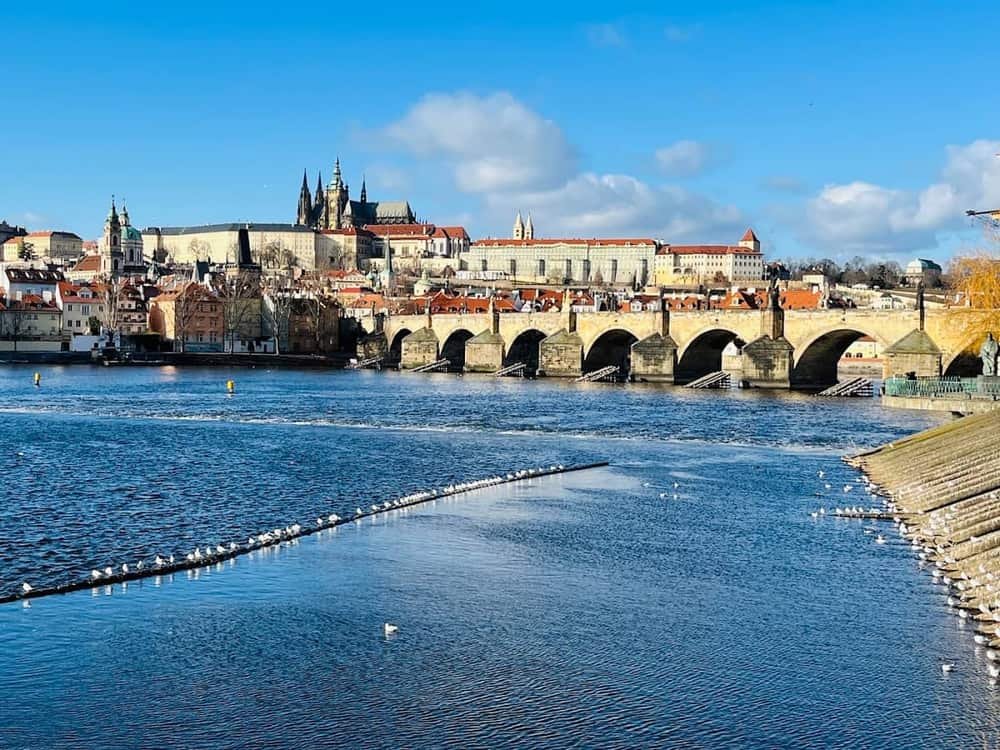
There is no bad month to see Prague — the city works in snow and in heat — but there are months that suit different trips far better. The short answer: late April to early June and September to mid-October give the best balance of weather, light and crowds; December is the most atmospheric and the busiest; January and February are cold, quiet and cheap. The figures below are 30-year averages (1995–2024) from our weather page, built on Open-Meteo reanalysis data.
The year at a glance
| Month | Avg high | Avg low | Rain days | Sunshine | |---|---|---|---|---| | January | 3°C | −2.5°C | 10 | 130 h | | February | 5.5°C | −1.5°C | 9 | 164 h | | March | 9.4°C | 0.7°C | 11 | 235 h | | April | 14.8°C | 4.5°C | 10 | 300 h | | May | 19.4°C | 9.4°C | 13 | 334 h | | June | 23°C | 13.3°C | 12 | 357 h | | July | 24.8°C | 15.2°C | 13 | 368 h | | August | 24.8°C | 15.1°C | 11 | 338 h | | September | 20°C | 11.1°C | 9 | 257 h | | October | 14.6°C | 6.9°C | 10 | 196 h | | November | 8.1°C | 2.4°C | 9 | 125 h | | December | 4°C | −1°C | 10 | 120 h |
Two things stand out. Summer is the wettest season by volume — rain comes in short, heavy thunderstorms rather than grey days. And September ties for the fewest rain days of the year while still averaging 20°C, which is why locals rate it so highly.
Spring: April to early June
The parks turn green, the beer gardens reopen, and the light is long without the summer crush. April can still be chilly, with cool mornings; by May, Petřín hill is in blossom and outdoor terraces fill up. Easter brings markets to Old Town Square and a spike in visitors. Read more in Prague in spring.
Best for: walking, gardens, first-time visitors who want everything open.
Summer: late June to August
The warmest, busiest and liveliest time. Beer gardens at Letná and Riegrovy sady are at their best, the river embankment at Náplavka hums every evening, and the days are long. The downsides are crowds on Charles Bridge and in the Castle, higher hotel prices and the odd heatwave. See Prague in summer.
Best for: nightlife, beer gardens, river life, travellers with school-age children.
Autumn: September to October
The favourite season of people who know the city. September keeps summer warmth with fewer crowds; October brings golden trees on Petřín and in Stromovka and crisp mornings. More in Prague in autumn.
Best for: photographers, couples, walkers, anyone who dislikes queues.
Winter: November to March
Cold, short days and a softer pace — with one great exception. From late November to early January, the Christmas markets on Old Town Square and Wenceslas Square turn the centre into a postcard, and the city fills up, especially at weekends and New Year. January and February are the quietest months: grey, sometimes snowy, and the best value of the year. Museums, cafés and beer halls make winter far more comfortable than the thermometer suggests.
Best for: Christmas atmosphere (December), budget breaks and empty museums (January–February).
Crowds and prices
- Busiest: the Christmas market weeks, New Year, Easter, and July–August weekends.
- Quietest: January, February and early March, and weekdays in November.
- Hotels track demand closely: a room that costs little on a February Tuesday can cost several times more on a December Saturday. Book early for December and summer weekends.
Month-by-month detail
Each month has its own page with the averages, what is on and what to pack: start with May, September or December. For festivals and concerts, check the events calendar, and for building a trip around the dates you have, use the itinerary builder.
Our verdict
If you can choose freely, come in mid-May or mid-September for three to four days. If you want magic and accept the crowds, come for the first two weeks of December, midweek. And if the budget matters more than the sunshine, late January will give you a quieter, cheaper and entirely real Prague.
Dates worth planning around
- Easter: markets on Old Town Square and Wenceslas Square, painted eggs and willow whips — and a surge of weekend visitors.
- 12 May: the Prague Spring music festival traditionally opens, with concerts in the Rudolfinum and the Municipal House.
- Summer evenings: open-air cinema, music on the Náplavka embankment and the busiest beer gardens.
- 28 October: Czechoslovak Independence Day, a public holiday with ceremonies and some closures.
- 17 November: Struggle for Freedom and Democracy Day, remembering 1939 and 1989, with candles on Národní třída.
- Late November to early January: the Christmas markets, then New Year's Eve fireworks over the river.
On public holidays many shops close, while museums, pubs and restaurants usually stay open. The events calendar lists exact dates each year.
What to pack
Whatever the month, bring comfortable shoes with grip: Prague is a city of cobbles and hills. In spring and autumn add a warm layer for the evenings; in summer a light rain jacket for thunderstorms; in winter proper boots, a hat and gloves, because the wind off the Vltava on Charles Bridge bites.
Where to stay nearby
Live prices and availability on a map centred on this exact spot — hotels, apartments and hostels, so you can judge the walk from here rather than guess from an address.
Bookings made through this map earn us a commission. Your price is unaffected.