
Guides
Driving to Prague: vignette, road rules, parking and when to leave the car
Tony Denesa – Travel Advisor9 min read
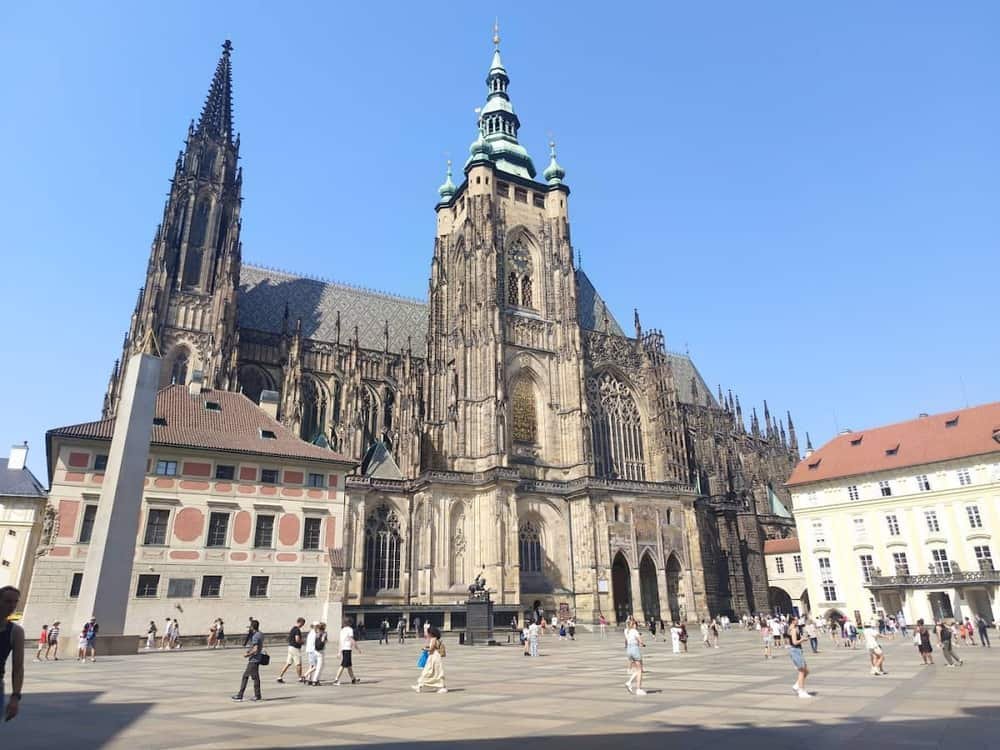
Driving to Prague is easy: the Czech motorway network links the city with Germany, Austria, Poland and Slovakia, and the roads are good. Driving *in* Prague is another matter. The historic centre is a maze of one-way streets, trams and pedestrian zones, and parking is limited and strictly controlled. The best plan for most visitors is to drive to the city, park the car, and use the excellent public transport. Here is what you need to know.
The electronic vignette
To use Czech motorways and most expressways, a car needs a valid electronic vignette (*elektronická dálniční známka*). There is no sticker: the vignette is linked to your number plate and checked by cameras. Buy it before you reach the motorway on the official site, edalnice.cz, or at border petrol stations and points of sale.
When checked on edalnice.cz in September 2026, prices for a standard passenger car were:
- 1 day: 210 Kč
- 10 days: 290 Kč
- 30 days: 460 Kč
- 1 year: 2,440 Kč
Cars with low-emission or alternative drives may qualify for cheaper eco prices; the official site calculates them. Driving on a toll section without a vignette can mean a fine of up to 20,000 Kč, according to the same source. Buy only on the official site — look-alike sites charge a hefty "service fee" for the same vignette.
Road rules that catch visitors
- Headlights on, dipped, at all times, all year round.
- Zero alcohol. The legal limit for drivers is zero, and police do test.
- Speed limits: 50 km/h in towns, 90 km/h outside towns and 130 km/h on motorways, unless signs say otherwise.
- Winter tyres are required from 1 November to 31 March whenever there is snow, ice or frost on the road.
- Trams have priority in most situations; never pass a stopped tram on the side where passengers are getting off unless there is a raised island.
- Children below a certain height and weight must use a child seat.
- Carry a reflective vest, a warning triangle and a first-aid kit.
- Phones only with a hands-free system.
Coming from Romania
The usual route runs through Hungary and Slovakia: from Oradea or Arad to Budapest, on to Bratislava, then north on the D2 and D1 motorways through Brno to Prague. Depending on your starting point and border crossing, expect roughly 800 km from Oradea and well over 1,300 km from Bucharest. You need a Hungarian and a Slovak e-vignette as well as the Czech one — all electronic, all bought online by number plate. Our guide Prague for Romanians covers the trip in more detail.
The D1 between Brno and Prague
The D1 is the Czech Republic's main motorway and one of its busiest. It has been rebuilt section by section for years, so expect roadworks, narrowed lanes and queues, especially on Friday afternoons and Sunday evenings. Check traffic before you set off and allow extra time.
Parking in Prague
Most of central Prague is covered by paid parking zones, marked by coloured lines and signs:
- Blue zones are for residents and permit holders. Parking there as a visitor can mean a fine or a towed car.
- Orange and mixed (violet) zones allow visitors to park for a fee, usually for limited periods, paid at meters or through the city's parking app and website.
Street parking in the historic centre — Old Town, Malá Strana, Hradčany — is extremely limited. Some hotels offer parking or have agreements with nearby garages; ask when booking, and expect to pay extra.
Park and ride: the smart choice
The city's P+R car parks sit next to metro stations on the edge of Prague, for example at Zličín on line B, Černý Most on line B, Letňany on line C and Opatov on line C. Park there, buy a public transport ticket, and you are in the centre in about twenty to thirty minutes. Fees are low, and the car is off the narrow streets for your whole stay. Check each car park's rules and opening hours on the operator's site, as some are designed for commuters.
When a car is useful
A car makes sense for day trips outside Prague, where public transport is slower:
- Karlštejn — a Gothic castle in wooded hills, also easy by train.
- Kutná Hora — the bone chapel and St. Barbara's Cathedral.
- Český Krumlov — a long day, better as an overnight trip.
- Bohemian Switzerland — the sandstone national park near the German border.
Renting a car
If you fly in and want a car only for a day or two out of town, rent it for those days rather than for the whole trip, ideally from a location outside the historic centre. Check whether the price includes the vignette, which many Czech rental cars already carry, and compare the deposit and insurance excess carefully.
Our advice
Drive to Prague, park on the edge or at your hotel, and forget the car until you leave. Use the metro and trams in the city, and take the car out only for day trips. Build your days with the itinerary builder, and check the costs of transport and sights on the prices page.
Where to stay nearby
Live prices and availability on a map centred on this exact spot — hotels, apartments and hostels, so you can judge the walk from here rather than guess from an address.
Bookings made through this map earn us a commission. Your price is unaffected.