
Guides
Prague in summer: how to enjoy the city when it is hot and full
Tony Denesa – Travel Advisor9 min read
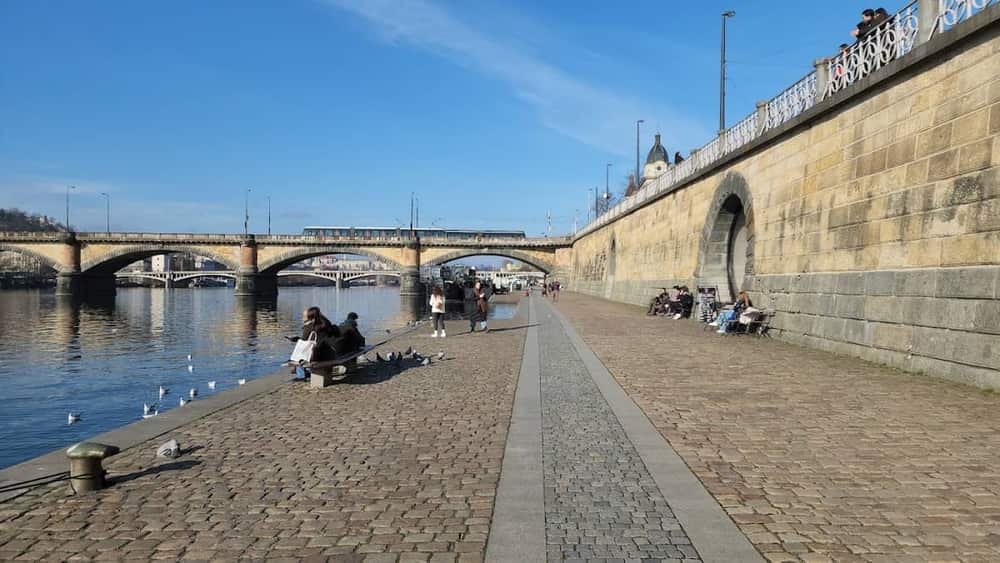
Summer is when Prague is at its most alive and its most difficult. The evenings are long and warm, the city moves outdoors to the river and the parks, and the beer gardens are full until late. It is also when the historic centre carries its heaviest crowds, the cobbles hold the afternoon heat, and the walk over Charles Bridge at noon is a slow shuffle through a crowd of tour groups.
The difference between a great summer trip and an exhausting one is almost entirely about timing. The city rewards people who get up early, disappear in the middle of the day and come back out at six.
What the weather actually does
June is warm rather than hot for most of the month and has the longest light of the year. July and August now bring regular spells above thirty degrees, and the stone centre holds the heat into the night. Summer rain tends to come as short, heavy afternoon showers rather than grey days. The month-by-month detail is on the weather page.
Two practical consequences. Many older hotels and apartments have no air conditioning, so check before you book. And the Castle ridge has very little shade — the climb up at two in the afternoon is the single most common way visitors wreck a summer day.
Rebuild the day
Before ten: the big sights. Cross Charles Bridge before eight, when it is empty and golden, and be at Prague Castle when the gates open. The Old Town Square is pleasant at nine and a crush by eleven.
The middle of the day: go indoors or go to the water. Museums are cool and quieter at lunchtime — the National Museum, the Jewish Museum sites (closed on Saturdays), or the National Technical Museum if you have children. Or take a long lunch in a vaulted cellar.
From five or six: the city's best hours. This is when Prague itself comes out.
The river
The Vltava is the summer city's living room.
- Náplavka, the embankment below the Dancing House, fills with bars on boats, food stalls and people sitting on the stone edge with a drink. On Saturday mornings it hosts one of the city's best farmers' markets.
- Paddle boats and rowing boats rent from Slovanský ostrov near the National Theatre. Half an hour on the water with the Castle in front of you costs little and beats any viewpoint.
- River cruises range from a short hop to a dinner cruise; the cruise guide sorts out which is worth it.
- Small public ferries cross the river on the ordinary transport ticket — the cheapest boat trip in the city.
The beer gardens
A summer evening in a Prague beer garden is one of the great simple pleasures of Central Europe.
- Letná sits on the bluff above the river, under chestnut trees, with the whole line of Vltava bridges below. Come for sunset.
- Riegrovy sady in Vinohrady is the local favourite, with a view across the rooftops to the Castle as the sun goes down behind it.
- Grébovka has a small vineyard and a wine pavilion — the alternative for people who have had enough beer.
Beer gardens work on the simplest possible system: queue at the counter, pay, carry your plastic cup to any free spot on a bench. Nobody minds you sharing a table.
Getting out of the heat
If the city gets too hot, go up or go green. Petřín hill is shaded orchards and woodland a few minutes from Malá Strana. Vyšehrad has breezy ramparts and far fewer people than the Castle. Stromovka park and the gorge of Divoká Šárka in the north-west are proper green space inside the city. For a full day out, Karlštejn is under an hour by train.
Crowds and prices
July and August are the busiest months. Hotel prices are high but, unlike December, rarely spike beyond reach outside specific event weekends. Book the good places early, and consider staying outside the Old Town — the where to stay guide covers why Vinohrady and Karlín often make better summer bases, with cafés and beer gardens on the doorstep and evenings that are local rather than touristic.
Summer events worth timing
Free music takes over the riverbank and the parks on several weekends, the United Islands festival among them, and in August Letní Letná brings contemporary circus tents to Letná park. Dates move each year, so check the events calendar before you plan around one. On any warm Friday, Náplavka and the beer gardens are the event.
A summer checklist
- Water bottle — Prague tap water is safe, and some public fountains run in summer.
- Comfortable shoes with real soles; cobbles get slippery after a shower.
- Something to cover shoulders for churches.
- A 24- or 72-hour transport ticket, so you can hop on a tram out of the heat whenever you like.
Where to stay nearby
Live prices and availability on a map centred on this exact spot — hotels, apartments and hostels, so you can judge the walk from here rather than guess from an address.
Bookings made through this map earn us a commission. Your price is unaffected.