
The city
The origins of Czech cuisine: dumplings, sauces and a kitchen shaped by empire
Tony Denesa – Travel Advisor9 min read
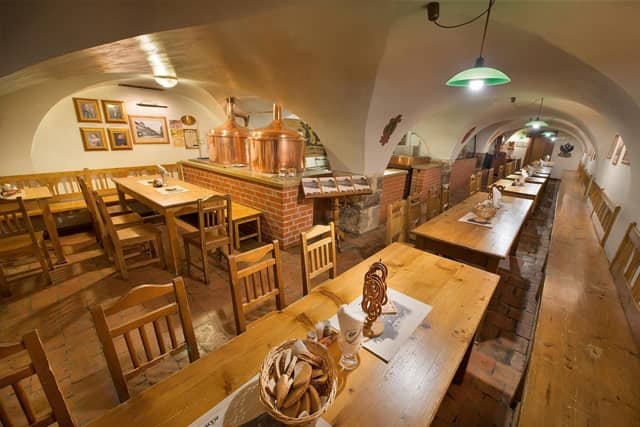
Czech food has a reputation for being heavy, and it is — it was made to feed people through cold winters and long working days, and to sit well alongside beer. But behind the dumplings is a real culinary history: peasant cooking from Bohemia and Moravia, refined in the kitchens of the Habsburg Empire, standardised under communism, and now rediscovered by a new generation of Prague cooks.
The peasant foundation
The base of Czech cooking is what the land gave: pork, geese and ducks raised on farms; cabbage, root vegetables, potatoes (from the eighteenth century), mushrooms from the forests, and flour. Soups were daily food — *bramboračka* (potato soup with mushrooms and marjoram), *česnečka* (garlic soup) and *kulajda* (a creamy dill and mushroom soup). Meat was for Sundays and feast days, and the pig slaughter in winter, the *zabijačka*, was a village event that produced sausages, black puddings and brawn.
Dumplings: the heart of the plate
Knedlíky are the signature. The most common, *houskové knedlíky*, are made from a bread-like dough, boiled in a long roll and sliced — traditionally with a thread. There are also potato dumplings, and sweet fruit dumplings filled with plums or apricots. Their job is simple: to soak up sauce. That is why Czech cooking is built around sauces.
The Habsburg kitchen
For centuries Bohemia was part of the Habsburg lands, and Prague's kitchens traded dishes with Vienna and Budapest. From that shared imperial table came:
- Goulash (*guláš*), Hungarian in origin, turned Czech: thicker, less fiery, served with dumplings and often with onion.
- Schnitzel (*řízek*), the breaded cutlet of Vienna, now as Czech as it is Austrian — pork more often than veal.
- Strudel (*štrúdl*) and many pastries of the Viennese coffee house.
Many cooks who worked in Vienna came from Bohemia, and the influence ran both ways.
Svíčková and the sauces
The dish Czechs call their national meal is svíčková na smetaně: beef sirloin marinated and braised with root vegetables, then served in a smooth sauce of puréed vegetables and cream, with bread dumplings, a spoonful of cranberries and a swirl of whipped cream. It is a festive dish, often cooked for weddings and Sunday lunches. Other classics include vepřo knedlo zelo — roast pork, dumplings and sauerkraut — and *rajská*, beef in tomato sauce.
Rettigová and the first cookbooks
In 1826 Magdalena Dobromila Rettigová published a cookbook written in Czech for Czech households, at a time when German was the language of the educated classes. It was part of the national revival: cooking in Czech was a patriotic act. Her recipes, with their butter, cream and eggs, shaped the middle-class kitchen of the nineteenth century.
Communism and the canteen
After 1948, private restaurants were nationalised. Public catering followed centrally approved recipe norms that fixed ingredients and portions for every dish, from goulash to fried cheese. The result was predictable, often dull food — but it also preserved the classic recipes almost unchanged for forty years. Fried cheese (*smažený sýr*) and the workers' canteen became part of everyday life.
Christmas carp
On Christmas Eve, the traditional dinner is fried carp with potato salad, often after fish soup. In December, live carp are sold from tubs in the streets, and some families still keep the fish in the bathtub until the big day. Sweet Christmas biscuits, *cukroví*, are baked by the dozen. See our Christmas markets guide.
The revival since 1989
After 1989, Prague first rushed towards international food. Then, from the 2000s, a new generation began to cook Czech classics properly again: fresh ingredients, long-cooked sauces, and beer served with care. Restaurants such as the Lokál chain helped make the traditional pub canteen fashionable. At Lokál Dlouhá, goulash with dumplings was 219 Kč on the published menu when checked in September 2026 — see the prices page. At the other end of the scale, the Michelin guide now covers Prague, and several chefs reinterpret Czech ingredients in tasting menus.
Where to taste it in Prague
- Classic pub food: the beer halls, with goulash, roast pork and fried cheese. Read Czech beer hall etiquette first.
- Sit-down Czech restaurants: browse the restaurants section by district.
- Snacks and markets: see Prague street food.
- Cakes and coffee: traditional cafés serve *větrník*, *koláče* and strudel.
- The drink that goes with it: read the history of Czech beer.
A few words for the menu
- *Polévka* — soup; *hlavní jídla* — main courses; *přílohy* — side dishes, often ordered separately.
- *Vepřové* — pork; *hovězí* — beef; *kachna* — duck; *husa* — goose; *pstruh* — trout.
- *Knedlíky* — dumplings; *hranolky* — fries; *brambory* — potatoes; *zelí* — cabbage.
- *Moučníky* — desserts; *palačinky* — pancakes; *ovocné knedlíky* — fruit dumplings.
At lunchtime on weekdays, look for the *polední menu*, a fixed-price soup and main course that is often the best value of the day in neighbourhoods such as Vinohrady and Karlín.
Where to stay nearby
Live prices and availability on a map centred on this exact spot — hotels, apartments and hostels, so you can judge the walk from here rather than guess from an address.
Bookings made through this map earn us a commission. Your price is unaffected.