
The city
Czech beer: a thousand years of brewing, one golden revolution
Tony Denesa – Travel Advisor9 min read
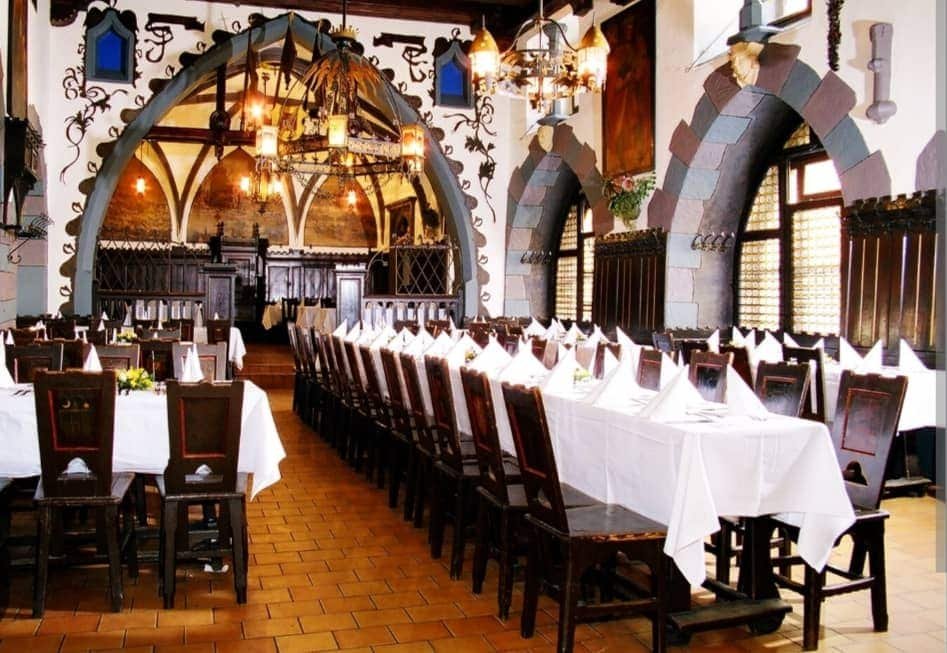
No nation on earth drinks more beer per person than the Czechs, and in Prague that is not a statistic but a way of life. Beer is served in beer halls that have poured it for centuries, priced as an everyday drink, and discussed with the seriousness other countries give to wine. The story of how it got there runs from medieval monasteries to one of the most copied inventions in the history of drinking.
Monks, towns and royal rights
Brewing in the Czech lands is as old as written history. In the Middle Ages, beer was a staple food as much as a drink — safer than water, nourishing and brewed in monasteries, whose monks kept the know-how alive. The Břevnov Monastery on the western edge of Prague, founded in 993, traces its brewing tradition to its earliest years and brews again today.
As towns grew, the right to brew became a valuable privilege granted by the king. Burghers who owned houses within the walls could brew, and towns guarded their monopolies jealously. When Plzeň was founded at the end of the thirteenth century, its citizens received brewing rights — a detail that would matter enormously five and a half centuries later.
Prague itself was full of brewhouses. U Fleků in the New Town, which has brewed on the same site since at least the end of the fifteenth century, is the best-known survivor, still making its own dark lager.
The golden revolution of 1842
By the early nineteenth century, beer in Bohemia was often poor: cloudy, warm-fermented and inconsistent. In Plzeň, fed-up burghers are said to have poured barrels of bad beer out in front of the town hall. They pooled their brewing rights and built a new, modern Burghers' Brewery, and in 1842 they hired a young Bavarian brewer, Josef Groll.
Groll combined three things: pale malt dried with a gentle new technique, the soft water of Plzeň and the aromatic Saaz hops grown around Žatec, and he fermented cold, in the Bavarian lager style. The result was something no one had seen before: a clear, golden, crisp beer with a creamy head. It was called Pilsner after the town — and it conquered the world. Most of the pale lagers drunk on the planet today descend from it. The brewery later took the name Pilsner Urquell, "the original source", to insist on the point.
Budweis, and a very long argument
In České Budějovice — Budweis in German — brewers also made lager with a famous name. In the nineteenth century an American brewery launched a beer called Budweiser, while a Czech brewery founded in the town in 1895, Budějovický Budvar, sold its own. The result was one of the longest trademark disputes in commercial history, fought in courts around the world for over a century. In much of Europe, Budvar sells as Budweiser Budvar; in North America it is often sold under a different name.
Hops, malt and the national taste
Czech beer rests on local ingredients that brewers defend fiercely. Saaz hops (*Žatecký poloraný červeňák*) give the gentle, spicy bitterness, and Moravian barley malt gives the body. The classic Czech pale lager is less dry than a German Pils, with more malt sweetness and a fuller finish, which is why it is so drinkable in half-litre glasses. The way it is poured — with a thick, wet head of foam — is part of the style, not a trick; see Czech beer hall etiquette.
Czech beers used to be described by degrees (*desítka*, *dvanáctka*), a measure of the original sugar content of the wort rather than of alcohol. You will still hear regulars order a "ten" or a "twelve".
Communism: frozen in time
After 1948 the breweries were nationalised and merged into state enterprises. Investment was scarce, and many small breweries closed. But the long production methods — slow fermentation and long lagering in cold cellars — survived precisely because nobody had the money to "modernise" them. When Western breweries were speeding up production, Czech beer kept its old character. It also stayed cheap, as a matter of social policy.
The pub became one of the few semi-free public spaces. Writers and dissidents met in them; U Zlatého tygra in the Old Town is forever linked with the novelist Bohumil Hrabal, who drank there for decades.
Since 1989: the big and the small
After the Velvet Revolution, the large breweries were privatised and bought by international groups. At the same time came a boom of minibreweries (*minipivovary*): today there are hundreds across the country, many in Prague itself, brewing on site and serving in their own taprooms. U Medvídků, Strahov Monastery Brewery and many neighbourhood brewpubs make wheat beers, dark lagers, IPAs and seasonal specials alongside classic pale lager.
Another modern innovation is tank beer (*tankové pivo*): unpasteurised lager delivered fresh to pubs in large tanks. Look for *tankovna* on the door.
Drinking the history today
- For the golden original, visit the brewery in Plzeň on a day trip, or drink a fresh tank Pilsner in a classic Prague pub.
- For a dark lager brewed on site for centuries, go to U Fleků in the New Town.
- For the new wave, try a brewpub in Vinohrady or Karlín.
- For prices, see our prices page.
The Prague beer halls section lists the best places, and the itinerary builder can add an evening of them to your trip.
Where to stay nearby
Live prices and availability on a map centred on this exact spot — hotels, apartments and hostels, so you can judge the walk from here rather than guess from an address.
Bookings made through this map earn us a commission. Your price is unaffected.