Guides
Prague on a budget: what a cheap trip actually costs
Tony Denesa – Travel Advisor9 min read
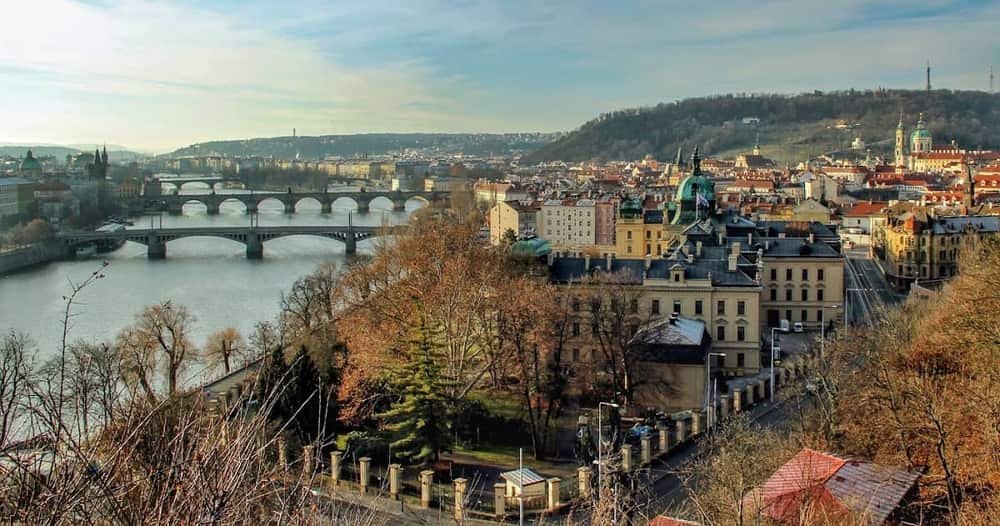
Prague has a reputation as a cheap city that its centre no longer deserves: a terrace on Old Town Square charges what Vienna charges. Two streets away the old prices survive. This guide puts real, dated numbers on a frugal trip — every figure was checked in September 2026 and lives with its source on the prices page — and then says plainly where the money actually goes.
The three fixed costs
Transport. A 72-hour ticket was 340 Kč in the PID app (350 Kč on paper). That is the whole network for three days — metro, trams, buses, ferries, the funicular. Nothing else you buy in Prague is this good value. How it works: transport tickets.
A bed. The cheapest real saving is the neighbourhood, not the star rating. A room in Vinohrady, Karlín or Žižkov costs less than the same room in the Old Town and is ten minutes away by tram. See where to stay.
Food. At Lokál Dlouhá, one of the honest beer halls in the centre, goulash with dumplings was 219 Kč and pork schnitzel 239 Kč on the published menu. Those are the prices to measure everything else against: much more, and you are paying for the address.
The free half of the city
The best of Prague costs nothing, and that is not a consolation prize:
- Charles Bridge at sunrise, empty.
- The courtyards of Prague Castle, the guard change on the hour, and the view from the ramparts.
- Vyšehrad — the old fortress, the cemetery of Czech greats, the best view up the river.
- Letná and the metronome, Riegrovy sady, Petřín's orchards, the Stag Moat.
- Josefov from the outside, the lanes of Malá Strana, the Lennon Wall, the Náplavka embankment.
The full list is in free things to do in Prague.
Where the money goes, and what it buys
| What | Checked price | Worth it? | |---|---|---| | 72-hour transport ticket | 340 Kč | Always | | Prague Castle, basic circuit | 450 Kč | If you go inside; the grounds are free | | Jewish Museum | 600 Kč | The most moving museum in the city | | Petřín funicular | 90 Kč | Free with a 24- or 72-hour ticket — walk up instead | | Prague Visitor Pass, 72 hours | 3,300 Kč | Only with two paid sights a day: the arithmetic |
Eating cheaply without eating badly
- The weekday lunch menu (*polední menu*) is the single best deal in Czech eating: soup and a main for a fixed price, in ordinary restaurants, from about 11 a.m. to 2 p.m.
- Beer halls over restaurants. The food is hearty and cheap and the beer is the point. Read how a Czech pub works.
- Bakeries and delicatessens for breakfast and for *chlebíčky* — see Prague street food.
- One street from the square. This is the whole trick, repeated.
The three mistakes that cost most
- Changing money on the street or at a "0% commission" window. The rate is the fee. Pay by card in koruna and decline the machine's offer to charge you in your own currency — that conversion is always the worse one. See the Czech koruna.
- Eating on the main squares. The same goulash costs half as much two streets away.
- Buying a city pass without doing the sums. With one museum a day it loses money.
And one that is not about money: the ham stall on Old Town Square prices by 100 grams and cuts a large piece. Agree the weight and the total before it is sliced — the safety guide lists the rest.
A three-day budget, honestly
Transport for 72 hours, one big paid sight, lunch menus, dinner in beer halls, and everything else free: that trip costs less than a single evening in many Western capitals, and it is not a worse trip. Add the Jewish Museum and the Castle and you are still under what a city pass would cost you.
When to come. January and February are the cheapest months by a wide margin, and Prague in the cold is a city of cafés, beer halls and empty museums. See the best time to visit.
Getting here cheaply
The flight is usually the biggest single line in the budget, and it is the one with the widest spread: the same route can double between a Friday evening and a Tuesday morning. Fly midweek, travel with cabin baggage only, and remember that the fare saved by flying at dawn is partly spent on the transfer, because at that hour the metro is closed. Read the airport guide before booking a very early or very late flight, and if you are driving, the driving guide covers the vignette and where to leave the car.
Two things worth paying for
Being frugal everywhere is how a trip stops being enjoyable. Two things earn their price in Prague. The first is a guided walk or a tasting at the start: the city's history is dense and unlabelled, and three hours with someone who knows it makes everything you see afterwards legible. The second is one evening with a table booked — a concert, a dinner with a view — because a trip built entirely on the cheapest option remembers as a blur. Everything else on this page is there so that those two are affordable.
What a day costs, roughly
Transport is fixed at about 113 Kč a day on the 72-hour ticket. A lunch menu and a beer-hall dinner are the price of one meal on Old Town Square. The rest is what you choose to go inside: nothing, on a walking day; 450 Kč at the Castle; 600 Kč at the Jewish Museum. The gap between a frugal day and an expensive one in Prague is almost entirely *where you sit down to eat*.
Where to stay nearby
Live prices and availability on a map centred on this exact spot — hotels, apartments and hostels, so you can judge the walk from here rather than guess from an address.
Bookings made through this map earn us a commission. Your price is unaffected.