
The city
Rudolf II and the alchemists: when Prague was the capital of curiosity
Tony Denesa – Travel Advisor10 min read
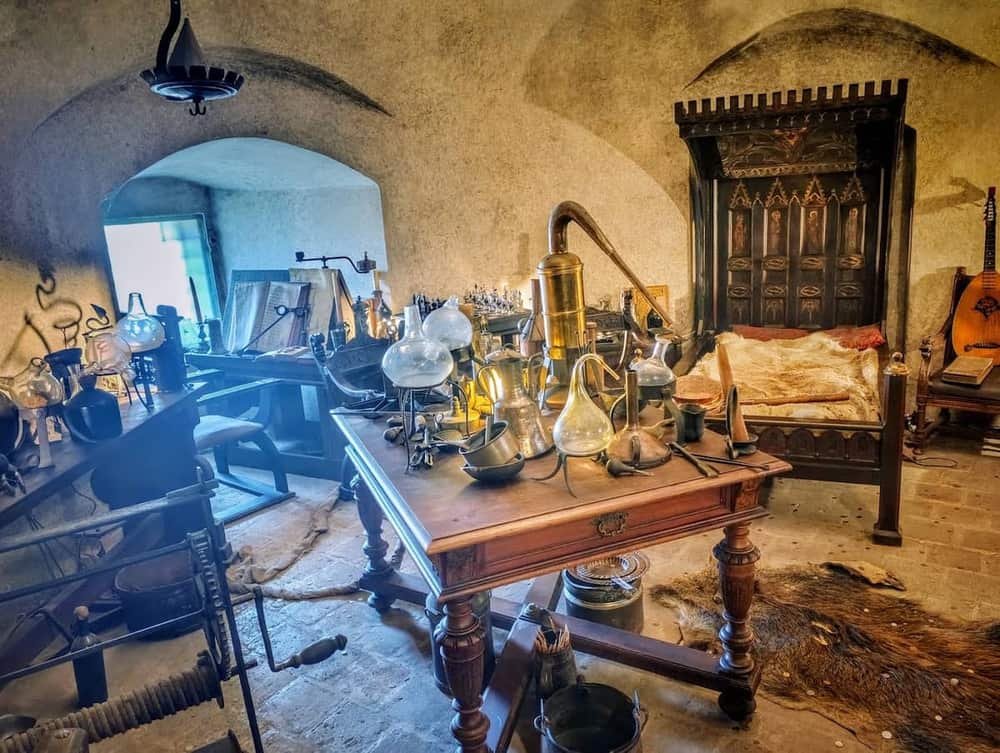
Two centuries after Charles IV, Prague had a second golden age, stranger and more mysterious than the first. Between the 1580s and 1612, Emperor Rudolf II made Prague Castle the seat of the Holy Roman Empire and filled it with astronomers, mathematicians, painters, sculptors, instrument makers, collectors — and alchemists searching for the philosopher's stone. The legends of magical Prague, golems and gold-makers, were born in his reign.
A reluctant emperor
Rudolf was born in Vienna in 1552, a Habsburg raised partly at the strict Spanish court of his uncle Philip II. He became King of Bohemia and Holy Roman Emperor in 1576. Intelligent, withdrawn and prone to bouts of deep melancholy, he never married, disliked the business of government and preferred the company of artists and scholars.
In 1583 he moved his court from Vienna to Prague. For the next three decades the city on the Vltava was once again an imperial capital, with ambassadors, bankers and the intellectual elite of Europe streaming in.
The Kunstkammer: a cabinet of wonders
Rudolf was one of the greatest collectors in history. In the new wings of Prague Castle he assembled a Kunstkammer, a cabinet of art and wonders: paintings by Dürer, Titian and Bruegel, sculptures, clocks and automata, scientific instruments, exotic animals and plants, rare minerals, and "natural marvels" such as so-called unicorn horns and bezoar stones. His menagerie included lions and exotic birds, and the Royal Garden grew plants from across the known world.
Much of this collection was later scattered. In 1648, in the last months of the Thirty Years' War, Swedish troops plundered Prague Castle and carried many treasures off to Stockholm. What remains can be glimpsed in the Prague Castle Picture Gallery.
Painters of a strange court
Rudolf's court painters created a refined, sensual and often bizarre style known as Rudolfine Mannerism. The most famous was the Milanese Giuseppe Arcimboldo, who painted portraits made of fruit, vegetables, flowers and books. His best-known image shows Rudolf himself as Vertumnus, the Roman god of the seasons, his face composed of pears, grapes, peas and corn — a joke, a compliment and an allegory of imperial harmony at once.
Tycho Brahe and Johannes Kepler
Rudolf invited the great Danish astronomer Tycho Brahe to Prague in 1599 as imperial mathematician. Tycho, famous for his precise observations of the stars and for the metal nose he wore after losing part of his own in a duel, brought his instruments and his decades of data. He died in Prague in 1601 and is buried in the Church of Our Lady before Týn on Old Town Square, where his tombstone can still be seen.
His assistant, the German mathematician Johannes Kepler, inherited his post and his data. Working in Prague, Kepler formulated the first two of his laws of planetary motion, showing that planets move in ellipses rather than circles. His astronomical tables, published years later, were named the Rudolphine Tables in honour of his patron. A statue of Tycho and Kepler stands on Pohořelec, near Strahov.
The alchemists
Rudolf was fascinated by alchemy — the search for the philosopher's stone that could turn base metals into gold and grant long life — which at the time was still entangled with early chemistry and medicine. Alchemists from across Europe came to Prague hoping for patronage.
The most notorious were two Englishmen: John Dee, the scholar and astrologer of Queen Elizabeth I, and his associate Edward Kelley, who claimed to speak with angels and to transmute metals. Dee spent several years in Bohemia before returning to England. Kelley won the emperor's favour, was knighted and grew rich, then fell from grace and died in prison in Bohemia in the 1590s.
The legend of Golden Lane
Visitors are often told that the tiny houses of Golden Lane at Prague Castle were home to Rudolf's alchemists. It is a lovely story and almost certainly not true. The houses were built into the castle walls around the end of the sixteenth century for the castle guards and craftsmen; the name probably comes from goldsmiths who lived there. The alchemists worked in laboratories elsewhere in the castle and in noble houses around the city. Centuries later, Golden Lane had a different famous resident: Franz Kafka wrote in house No. 22, rented by his sister, in 1916–1917.
Rabbi Loew and the emperor
In 1592, Rudolf received Rabbi Judah Loew ben Bezalel, the great scholar of the Jewish Town, at the castle. What was discussed is unknown, and the meeting became the stuff of legend — it was later linked to stories of the golem. The Jewish Town flourished in Rudolf's reign under its mayor Mordecai Maisel, the emperor's banker. Read more in Jewish Prague.
The fall of Rudolf
Rudolf's withdrawal from government, his quarrels with his family and the growing tension between Catholics and Protestants weakened his position. His brother Matthias forced him to give up Austria, Hungary and Moravia, and in 1611 Bohemia as well. Rudolf died at Prague Castle in 1612, and the imperial court returned to Vienna. Six years later, in 1618, Protestant nobles threw imperial officials out of a window at the castle, the Defenestration of Prague that began the Thirty Years' War.
The legacy of magical Prague
Rudolf's reign left Prague a reputation as a city of magic, mystery and learning that writers have used ever since. It also left real treasures: Kepler's laws, great works of art, and the idea of Prague as a crossroads of European thought.
Where to find Rudolf's Prague
- Prague Castle — the Spanish Hall and the Picture Gallery, the Royal Garden with the Renaissance Ball Game Hall and the Royal Summer Palace (Belvedere).
- Golden Lane — for the legend, and for Kafka.
- The Týn Church — Tycho Brahe's tomb.
- Strahov and Pohořelec — the statue of Tycho and Kepler, and the Strahov Library's cabinet of curiosities.
- Josefov — the Maisel Synagogue and the grave of Rabbi Loew; see Jewish Quarter tickets.
For the earlier golden age, read Charles IV and medieval Prague. Plan a day through Rudolf's city with the itinerary builder.
Where to stay nearby
Live prices and availability on a map centred on this exact spot — hotels, apartments and hostels, so you can judge the walk from here rather than guess from an address.
Bookings made through this map earn us a commission. Your price is unaffected.