
Guides
Jewish Quarter tickets in Prague: what one ticket covers and how to visit well
Tony Denesa – Travel Advisor8 min read
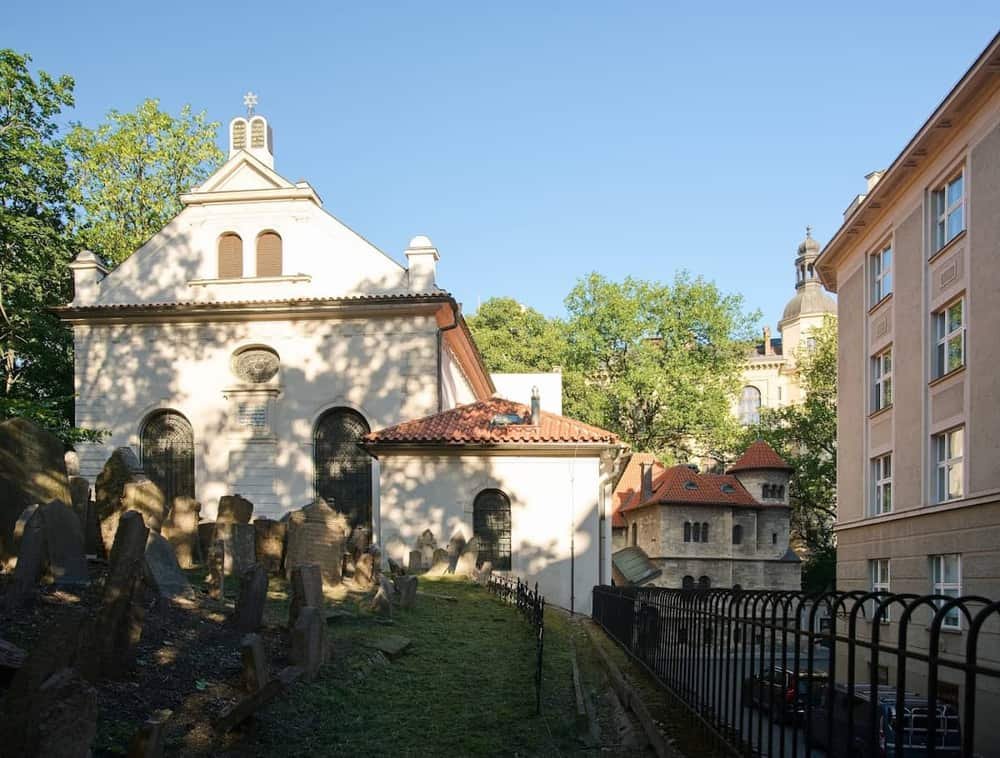
Josefov, the former Jewish Town of Prague, is one of the most moving places in Central Europe. Its buildings survived when the community that built them largely did not, and the Jewish Museum in Prague now cares for them. Visiting is simpler than it looks, as long as you know three things: what the ticket covers, what it does not, and when the sites are closed. Prices below were checked in September 2026 on the Jewish Museum's own site (jewishmuseum.cz); the running list is on the prices page.
The ticket
One Jewish Museum ticket covers the museum's synagogues — including the Maisel, Pinkas, Klausen and Spanish synagogues — and the Old Jewish Cemetery. When checked in September 2026, prices were:
- Adults: 600 Kč
- Students under 26: 400 Kč
- Children 7–15: 200 Kč
- Children up to 6: free
An individual or family ticket is valid for three opening days, so you do not need to see everything at once. Tickets are sold online and at the ticket offices at the synagogues and the visitor centre on Maiselova street, and sales end half an hour before closing.
The exception: the Old-New Synagogue
The Old-New Synagogue, the oldest active synagogue in Europe, is still used for worship by the Jewish community and is not managed by the museum. It has its own admission; check the current combined options at the ticket office. Men are asked to cover their heads inside, and head coverings are provided.
The closing day
The sites are closed on Saturdays, the Sabbath, and on Jewish holidays. This is the detail that catches out weekend visitors most often. If you are in Prague Friday to Sunday, plan Josefov for Friday or Sunday.
What you will see
- Pinkas Synagogue — its walls carry the handwritten names of nearly 80,000 Jews from Bohemia and Moravia murdered in the Holocaust. Upstairs, drawings by children from the Terezín ghetto. Most visitors leave in silence.
- The Old Jewish Cemetery — layer upon layer of leaning gravestones, used for more than three centuries within a small plot the community could not expand.
- Klausen Synagogue — exhibitions on Jewish traditions and customs, next to the cemetery exit.
- Maisel Synagogue — the history of Jews in Bohemia and Moravia.
- Spanish Synagogue — a gilded Moorish Revival interior, one of the most beautiful rooms in the city, a few minutes' walk from the others.
How to plan the visit
Allow two to three hours for everything at a thoughtful pace. A route that works:
- Start early at Pinkas Synagogue, before the groups.
- Walk through the cemetery, exiting by the Klausen Synagogue.
- Klausen, then the Ceremonial Hall nearby.
- A pause, then Maisel and the Spanish Synagogue.
- The Old-New Synagogue with its separate ticket.
The quarter is compact and sits between Old Town Square and the river, so it combines naturally with a morning in the Old Town. The Josefov district page maps the streets, and the itinerary builder fits it into your days.
Guided or independent?
The exhibitions are well labelled, so an independent visit works. A guide adds the stories that the buildings do not tell: the ghetto's clearance at the turn of the twentieth century, the golem legend and Rabbi Loew, and how the collections survived the war. If you have one morning only, a guided walk is the most efficient way to understand what you are seeing.
Respect and practicalities
- Dress modestly; these are places of memory and, at the Old-New Synagogue, of prayer.
- Bags go through security checks at some entrances.
- Photography rules differ between sites; follow the signs, and put the camera away at Pinkas.
For the wider story of the community, from the medieval ghetto to today, and for other Old Town sights on the same walk, see the Old Town district guide and one day in Prague.
Beyond the museum: the streets of Josefov
Most of the old ghetto was demolished around 1900 and rebuilt as elegant apartment blocks, which is why the quarter looks so grand today. Pařížská street, running from Old Town Square to the river, is lined with Art Nouveau façades and luxury shops. Beside the Spanish Synagogue stands Jaroslav Róna's statue of Franz Kafka riding on the shoulders of an empty suit, a nod to one of his early stories; Kafka was born a few streets away. At the river end, the Rudolfinum concert hall faces the Castle across the water.
For lunch after a morning of the synagogues, the Old Town has everything from simple Czech canteens to smarter dining rooms; the restaurants section filters by area. And if the visit leaves you wanting more of the history, the Prague in two days guide shows how Josefov fits into a short first trip.
Where to stay nearby
Live prices and availability on a map centred on this exact spot — hotels, apartments and hostels, so you can judge the walk from here rather than guess from an address.
Bookings made through this map earn us a commission. Your price is unaffected.