
The city
Forty-one years of communism, and where Prague still shows it
Tony Denesa – Travel Advisor9 min read
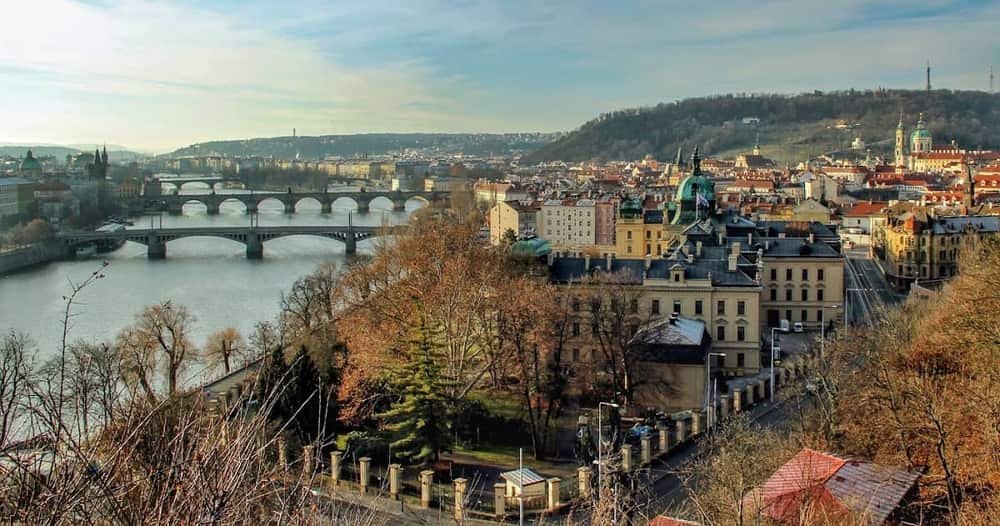
Between February 1948 and November 1989 Prague was the capital of a one-party state, and a visitor today walks past the evidence constantly without recognising it. The layer is thinner than the baroque and the Gothic, but it is everywhere once you know the vocabulary.
The coup, which was not quite a coup
Czechoslovakia came out of the war with a genuinely popular Communist Party — it won about 38 per cent of the vote in the free elections of 1946, the best communist result anywhere in Europe. In February 1948, with the party controlling the police and the streets, non-communist ministers resigned expecting to force an election. Instead, on 25 February 1948, President Beneš accepted their resignations, and Klement Gottwald announced the new government to a crowd on Old Town Square from the balcony of the Kinský Palace.
The regime called it Victorious February and kept the anniversary as a holiday for forty years. The photograph of that balcony became one of the most manipulated images of the century: Vladimír Clementis, standing beside Gottwald, was executed in 1952 and airbrushed out, leaving only the fur hat he had lent Gottwald against the cold — an image Milan Kundera opens *The Book of Laughter and Forgetting* with.
The Stalinist years
What followed was the harshest period. The StB, the secret police headquartered around Bartolomějská street in the Old Town, ran a mass network of informers. The show trials were real and lethal: Milada Horáková, a democrat who had survived Nazi imprisonment, was hanged at Pankrác prison on 27 June 1950 after a scripted trial; in November 1952 the party devoured its own in the Slánský trial, sentencing eleven senior communists — most of them Jewish, which was the point — to death. They were hanged on 3 December 1952.
The period's monument was the largest Stalin ever built: a 15-metre granite figure leading a double file of workers, on the Letná plateau above the river, unveiled on 1 May 1955. Its sculptor, Otakar Švec, killed himself weeks before the unveiling. Praguers privately called it *the meat queue*. In November 1962, on orders from a de-Stalinising Moscow, it was dynamited. The plinth is still there in Letná park, carrying the giant red Metronome since 1991.
1968, and the long grey after
The Prague Spring of 1968 — Alexander Dubček's attempt at *socialism with a human face* — ended on the night of 20–21 August, when Warsaw Pact armies invaded. Praguers argued with tank crews in the streets; the pictures went around the world. In January 1969 the student Jan Palach burned himself to death at the top of Wenceslas Square in protest at the settling apathy; a small memorial marks the spot in front of the National Museum.
The two decades that followed were called normalisation: purges, censorship, a numbed public life, and the quiet bargain — withdraw into private life and the state will leave you alone. The dissident world of Charter 77 and Václav Havel existed in its cracks.
What it built
The most visible communist inheritance is housing. From the 1960s to the 1980s the state ringed Prague with panelák estates — prefabricated concrete blocks — of which Jižní Město, south along metro line C, is the largest, built for around 80,000 people. Roughly a third of Czechs still live in panel housing, and the estates confound the Western reputation of the type: renovated, insulated in bright colours, well served by the metro that is itself a communist project — opened 1974, and covered in the transport history.
The regime also gave the skyline the Žižkov Television Tower, begun in 1985, and put Klement Gottwald's embalmed body on display in the National Monument at Vítkov from 1953 until the embalming failed and the body was cremated in 1962.
1989
On 17 November 1989 a permitted student march was cornered and beaten by riot police on Národní třída. Within days, hundreds of thousands were on Wenceslas Square and Letná plain jingling keys; within six weeks, on 29 December 1989, Havel was president. The Velvet Revolution earned the name — nobody died. A small bronze memorial of reaching hands marks the spot on Národní třída, easy to miss under the arcade at No. 16.
Where to see it
- Letná for the Stalin plinth and the Metronome.
- The Vítkov monument — the mausoleum years are laid out inside, honestly.
- The Museum of Communism, near Náměstí Republiky by the Municipal House, covers daily life, the StB and 1989; it is commercial in tone but the objects are real.
- The Memorial to the Victims of Communism at Újezd, below Petřín — Olbram Zoubek's eroding bronze figures, unveiled 2002.
- A panelák estate. Twenty minutes on metro C to Háje is a better lesson in the period than any museum caption.
- The nuclear layer underneath — shelters and blast doors — has its own article.
How it is argued about now
Czech public memory of the period is comparatively settled — the Institute for the Study of Totalitarian Regimes documents it, the crimes are not seriously disputed — but not simple. The 1946 election result sits uncomfortably in the national story; so does the scale of collaboration the StB files revealed. What people who lived it describe is the double life: a system nobody believed in by the 1980s, performed daily by nearly everyone. Havel's essay on the greengrocer who hangs the slogan in his window without reading it was written here, about this city, and it remains the best short explanation of how the whole thing worked.
Where to stay nearby
Live prices and availability on a map centred on this exact spot — hotels, apartments and hostels, so you can judge the walk from here rather than guess from an address.
Bookings made through this map earn us a commission. Your price is unaffected.