
Blog
The bridges of Prague, and what the river keeps doing to them
Tony Denesa – Travel Advisor8 min read
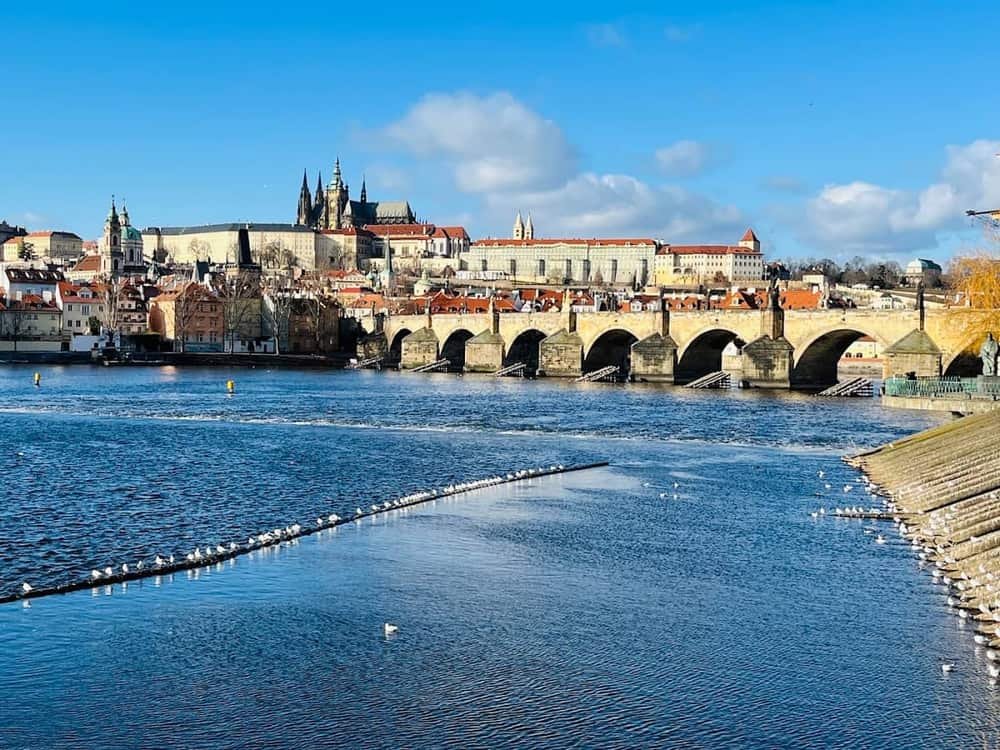
Prague exists because of a ford. The city grew where the Vltava could be crossed, and its history can be told through the crossings — which is also a history of floods, because the river that made the city keeps trying to take its bridges back. The first stone bridge, the Judith Bridge of 1172, went down in the flood of 1342. Its replacement lost arches to the flood of 1890. The flood of 2002 put much of the riverside under water. Every bridge below has survived the river so far; none of them takes that for granted.
Here they are, one by one, from the famous to the overlooked.
Charles Bridge
The one you came for, and it earns it.
Charles Bridge was begun in 1357 under Charles IV, on the site of the drowned Judith Bridge, and finished in the early 1400s. The design is attributed to Peter Parler, the architect of St Vitus Cathedral. A persistent later legend says the foundation stone was laid on 9 July 1357 at 5:31 — a palindrome of odd numbers, 135797531 — and whether or not the astrologers really chose the moment, the bridge has now stood for more than six centuries.
The thirty Baroque statues came later, mostly around 1700. The bronze one with the polished plaque is St John of Nepomuk, thrown from this bridge in 1393; his statue of 1683 marks roughly the spot. The flood of 1890 brought down two arches and dropped statues into the river — the bridge you walk is partly a repair.
Walk it before eight in the morning or after ten at night. At midday it is a crowd with a bridge somewhere underneath; at dawn, with the Castle above the far end and gulls on the water, it is the best free thing in Central Europe. It connects Old Town to Malá Strana, tower to tower, in about ten minutes.
Legion Bridge — most Legií
The one with an island in the middle.
Opened in 1901 in granite, replacing an 1841 chain bridge that had been the city's second permanent crossing. It runs from the National Theatre — with Café Slavia on the corner — across to Újezd, where the funicular climbs Petřín.
Halfway across, stairs drop onto Střelecký ostrov, Shooters' Island, a scrap of park at water level with big trees, swans and a summer open-air cinema. The view from the island back to Charles Bridge, one bridge upstream of the postcard angle, is the connoisseur's version. Kampa Island is a short walk from the far end.
Palacký Bridge — Palackého most
The oldest bridge almost nobody notices.
Opened in 1878, which makes it the second-oldest road bridge still standing over the Vltava in Prague, after Charles itself. It connects New Town at Palackého náměstí to Smíchov, and it once carried four monumental sculpture groups by Josef Myslbek — figures from Czech myth. Damaged in the American air raid of February 1945, they were moved to the gardens of Vyšehrad, where they still stand; the bridge kept the view and lost the drama.
Cross it for the sightline: Vyšehrad's ramparts and the Basilica of Saints Peter and Paul downstream, the Castle upstream, and the Náplavka embankment running along the right bank below.
Čech Bridge — Čechův most
The Art Nouveau one.
Built 1905–1908 and the shortest of the Vltava bridges, but the most decorated per metre: an iron arch bridge with bronze winged figures on tall columns, hydras, lamps and garlands — the whole Art Nouveau kit. It exists to extend the axis of Pařížská, the plane-tree boulevard cut through Josefov, across the river to Letná.
Cross it and climb the Letná stairs to the giant metronome — built where the largest Stalin monument in the world stood from 1955 until it was dynamited in 1962. From the plateau, and from the Letná beer garden in season, you get the one view that puts most of the bridges in a single frame.
The railway bridge at Výtoň
The one locals are arguing about.
The two-track steel truss below Vyšehrad — everyone just calls it *železniční most*, the railway bridge — dates from 1901, replacing an 1872 predecessor, and carries trains between the main station side and Smíchov, with a walkway cantilevered along each side. Crossing on foot, trains rattling past a few metres away, Vyšehrad's towers above you, is one of the city's stranger small pleasures.
It is also badly corroded, and the fight over whether to restore it or replace it with a new design has run for years — heritage bodies on one side, the railway on the other. At the time of writing the argument continues, which is a reason to walk it while you can.
The rest, briefly
Mánes Bridge, 1914, links the Rudolfinum to Malá Strana — the quickest way from Josefov to the Castle side. The Negrelli Viaduct, 1849, is the elder statesman nobody counts: Prague's second-oldest bridge, a kilometre of stone arches carrying trains over the river and through Karlín, handsomely restored, with the arches now housing cafés and studios. The Dancing House is not a bridge, but it guards the approach to one — Jiráskův bridge meets the embankment exactly at Frank Gehry's corner.
How to see them properly
Tram 17 runs the right bank from Výtoň past the National Theatre to Čechův most and beyond — most of the bridges for the price of one ticket.
Náplavka at dusk, with the railway bridge silhouetted upstream, is where the city itself goes to look at the river.
And Charles Bridge at dawn, once, no matter how bad the alarm feels. It is the reason the others get overlooked, and the only cure for the crowds is to get there before them.
Where to stay nearby
Live prices and availability on a map centred on this exact spot — hotels, apartments and hostels, so you can judge the walk from here rather than guess from an address.
Bookings made through this map earn us a commission. Your price is unaffected.